



DO NOT CONFUSE
DISSOCIATIVE DISORDER
OF IDENTITY
WITH PLURAL IDENTITY
Dissociative identity disorder
Dissociative identity disorder
Formerly known as multiple personality disorder, this mental illness was defined in 1994 in the DSM as a type of dissociative disorder.
An affected individual perceives multiple identities, or distinct ego states, as alternative personalities (alters), each with their own psychological characteristics and capable of momentarily and successively taking conscious control of their behavior.
This results in a state of distress and confusion.
Multiple identity
Cultural diversity is a major asset, as it allows individuals to draw upon various sources of their cultural heritage (languages, traditions, values) to construct a broad, flexible, and creative worldview, enriched by diverse influences, even if it can sometimes generate tension in the face of conflicting frames of reference or the feeling of not fully belonging to a single group.
This cultural plurality can be compounded by diverse emotional sensitivities. This fosters a better understanding of otherness and greater adaptability, transforming the individual into a bridge between diverse cultures, representations, and expressions—a source of great vitality for societies.
THE INNUMERABLE
BEING






Two plays by William Shakespeare
cite the same obvious truth:
I am not what I am.
In "Othello" (Act 1, Scene 3) :
Iago utters this line to express his hypocrisy and duplicity. It illustrates the complexity of his character and how he conceals a significant part of his true personality.
In "Twelfth Night" (Act 2, Scene 4) :
The statement is made by the character Feste, the play's fool, in reference to the masks that individuals wear in all circumstances.
OUR IDENTITY
COULD IT BE ANYTHING ELSE
THAT AN ILLUSORY MONOLITH ?
TWO PRECEDINGS
IN LITERATURE
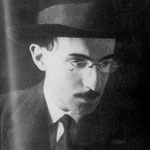
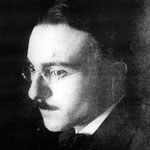
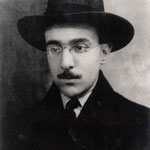
Fernando Pessoa
The Portuguese writer (1888–1935) was a prolific author. His notable pseudonyms include:
Alberto Caeiro, poet of nature; Ricardo Reis, classical and stoic; Álvaro de Campos, modern and futuristic; Bernardo Soares, "assistant" author, etc.
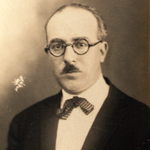
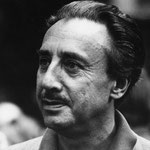
Romain Gary
Born Roman Kacew in Vilnius, he arrived in France at the age of 14. He was Fosco Sinibaldi, Shatan Bogat, Émile Ajar, Romain Gary, Lucien Brulard, René Deville, and others… He unintentionally won the Prix Goncourt twice. It was only after his death that this was realized.
“I have always been someone else.”


What
PHiLOSOPHY
says about it
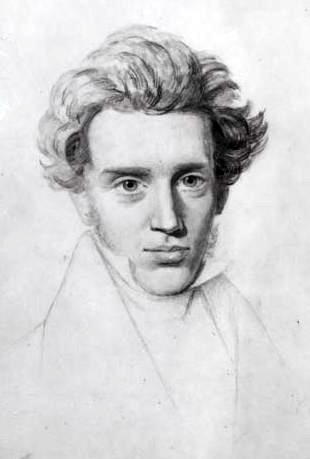
Søren Kierkegaard
His most important pseudonyms:
Victor Eremita (in Either/Or)
Johannes de Silentio (in Fear and Trembling)
Johannes Climacus (in Philosophical Fragments)
Anti-Climacus (in The Sickness Unto Death)
Constantin Constantius (in Repetition)
Hilarius the Bookbinder (in Stages on the Way of Life)
Vigilius Haufniensis (in The Concept of Anxiety)
Søren Kierkegaard used various pseudonyms in order to organize the richness of his thoughts.
For him, truth is not an abstract theory, but an intimate and subjective matter dependent on lived experience. By using pseudonyms, he embodies different perspectives and ways of life.
Like Socrates, he does not present himself as a master or possessor of truth. The pseudonym allows him to efface himself and become a mere "midwife" of ideas.
Freedom of thought.
These literary masks allow him to explore complex ideas, doubts, or paradoxes and their consequences, without his readers immediately mistaking these positions for his own convictions.
His method aimed to encourage the reader to think for themselves rather than imposing a ready-made system of thought.
Kierkegaard describes human philosophical evolution through three stages of existence.
1. The aesthetic stage stems from the world of the senses and the present moment, the pursuit of pleasure and novelty, and the escape from boredom.
The aesthete lives in the moment, rejects long-term commitments, and seeks to multiply intense or intellectual experiences.
2. The ethical stage, that of duty and responsibility, social integration, moral accountability, and continuity.
3. The philosophical stage and the world of paradoxes, that of personal questioning and subjective truths experienced in solitude.
This is the ultimate stage of existential authenticity, where each individual discovers their true sensibility.
The disappearance of a monolithic identity is the passage from the nothingness of the ego to the fullness of being.
The "aesthetics of withdrawal" is achieved through the use of pseudonyms (Johannes de Silentio, Anti-Climacus, etc.).
Self-effacement reflects a fundamental philosophical condition: one must die to one's ego and illusions to access true freedom and become an authentic individual.
The natural self is nothing more than an illusion or a superficial construct. By detaching oneself from immediate desires and the tyranny of others' gaze, the subject can "disappear" as a limited being, opening themselves to a broader dimension.
The author seeks to disappear behind their characters so that the reader is set in motion and becomes the agent of their own truth.
What
literature
says about it
Sure
“They call me John the Real. There are plenty of Johns, but I’m the real one.”
Tibor Fischer
Not sure
“She said Zsoze Kósta… Zsoze Kósta, looking me up and down, as if my name were an ill-fitting costume.”
Chico Buarque
Prudent
“I am such a slave to my name that I hardly dare write a line, for fear of harming it.”
Stig Dagerman
Serail
“They look at him standing before them, very dignified. Knowing his worth. Appreciated by some of the best. Deserving to be one of those to whom these weighted words are applied, words that make them stand tall and upright: ‘He’s somebody.’” “I don’t need to know who I am, since you all know.”
Nathalie Sarraute
Mirror
“I don’t need to know who I am, since you all know.”
Francis Picabia
Feedback
“Even from the point of view of the most insignificant things in life, we are not a materially constituted whole, identical for everyone, which each person simply has to consult as if it were a set of specifications or a will; our social personality is a creation of the thoughts of others.”
Marcel Proust
Series
“The individual is a succession of individuals.”
Samuel Beckett
Introduction
“I don’t care about the opinions of others—but to make a point of stating this is already to refer to them! Every Sunday, Robinson Crusoe put a flower in his hat, knowing that, even on his island, the other was there, that is to say, himself as other—the acknowledgment of this dependence was already less alienating than denial.”
Michel Thévoz
Assigned
“People who know you well always manage to subject you to your past.” »
Benjamin Kunkel
Starting Over
“It wouldn’t be so difficult to call people back and be more genuinely modest, but it’s too late for those friends. They wouldn’t be able to notice that I’m not a pain anymore. I need people who are fresh, new, for whom I would be synonymous with laughter.”
Miranda July
Pressure
“Let’s not forget that time when, because the pressure from outside was so intense, we tried to get together to build and present a nice, solid, presentable ‘I’…”
Nathalie Sarraute
Labels
“To be misunderstood, to be told verbally that you’re reduced to a few words hanging haphazardly on a clothesline like stained underwear: it’s enough to revolt even someone who doesn’t doubt themselves.”
Marisha Pessl
No
“Who goes there? A man? – No, sir.” A servant.
Bertolt Brecht
Crushed
“Physical integrity cannot withstand the dissolution of social personality.”
Claude Lévi-Strauss
Reputation
“As soon as someone has the reputation of being a Napoleon, even their lost battles are still victories.”
Robert Musil
Reticence
“Naturally, I will have to provide some explanation about what I do and what I am, but I will allow myself to wait a little longer.”
Cees Nooteboom
Cultural
“In France, I am an author; in Germany, a filmmaker; in the United Kingdom, a horror director; in the United States, a bum.”
John Howard Carpenter
Verdict
“At your age, to be without an identity is a disgrace.”
Samuel Beckett
Sorry
“I have always been someone else.”
Romain Gary
A SELECTION
OF FOR
KEY BOOKS
2006 / QUI DIT JE EN NOUS ?
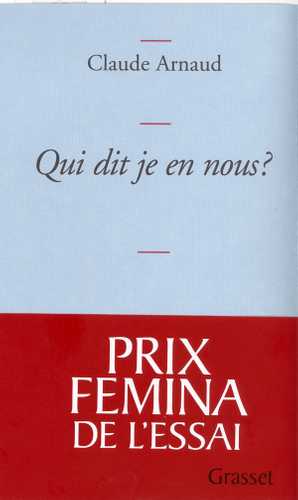
Claude Arnaud is a French writer, essayist, and biographer.
He is a member of the jury for the André Gide Literary Prize and the Sévigné Prize.
This essay shows how the great "factories" that have produced and shaped the classic postures of social identities since Antiquity—religion, homeland, social class, and gender—have largely, and thankfully, lost their power; identity is no longer inherited. Now it is acquired by those who wish to experience their free will. Today, our "life scenarios," more open and varied than in the past, profoundly enrich our potential.
2019 / NOS VIES COMME ÉVÉNEMENT
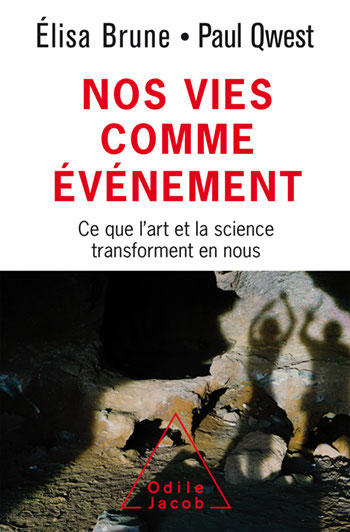
Elisa Brune was a Belgian writer
and science journalist, author of numerous essays.
The first part of the book
begins with
DEMYSTIFYING THE INDIVIDUAL
“My dear friend, as true as I am, I am,
and as true as you are, you are…
— And who are you?
— No awkward questions, please.”
Laurence Sterne
“No man is who he thinks he is,
this misunderstanding is general, elementary,
and it casts the gentle glow of comedy upon people.”
Milan Kundera
Then come the following chapters
with their questions:
Character, Posture, and Imposture
Do our characters play with our persona?
The Means of Narrative
What are the components of identity?
Being the Product of Others
In the End, What Are We?
2022 / IL N'Y A PAS DE AJAR
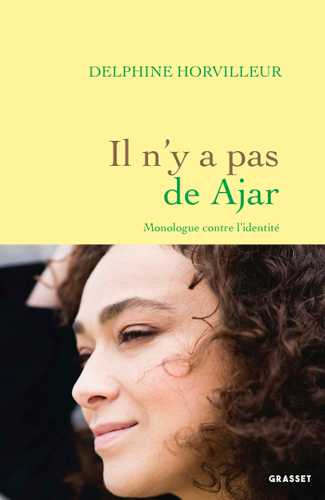
Delphine Horvilleur is a French writer and rabbi
belonging to the liberal Jewish organization Judaism in Motion.
She is a member of the Council of Francophone Liberal Rabbis
and editor-in-chief of the journal Tenoua.
"There are also new identity obsessions today, those that reduce us to mere heirs of a color or a "race," of the faults or merits of our ancestors, of the failings or sorrows of our fathers. Here again, this identity, passed down through past generations, would prevent us from being anything other than what our birth has dictated.
The grip of identity obsessions, exclusionary tribalism, and victimhood competition is tightening around us. It is tightened daily by all those who defend the idea of a "pure self" and an "authentic" affiliation with the nation, ethnicity, or religion. We are suffocating, and yet, for years, a man has held, according to the author, a key to emancipation: Emile Ajar.
This man doesn't exist… He is a literary hoax, the name Romain Gary used to demonstrate that we are not only what we say we are, that there is always a possibility of reinventing oneself through the power of fiction and the possibility that text offers of slipping into someone else's skin. From him, I imagined a monologue against identity, a one-man show that violently attacks all the identity obsessions of the moment.
2025 / JE SOMMES PLUSIEURS

Pierre Bayard is a French essayist and professor of French literature at the University of Paris VIII.
Does becoming aware of
our internal multiplicity
imply a radical change
in our relationship
with others and the world?
Rather than portraying human beings as torn between conflicting impulses, wouldn't it be simpler to acknowledge that each of us harbors different personalities, who sometimes don't even know each other?
Such a theoretical shift, which should logically encourage us to adopt multiple names, would contribute to a more peaceful society, since it would no longer make sense to criticize politicians for changing their minds, accuse one's spouse of adultery, or condemn criminals for acts they committed unwittingly.
SEROUX,
A COLLECTIVE
GOING AGAINST
THE GRAIN ?

BREAKING FREE FROM MONOCULTURES ?
Even for creators, freedom is often merely a formal illusion subject to intense pressures of all kinds. The most successful sometimes circumvent these imperatives of conformity and often unspoken commercial demands.
These repetitive patterns can be found throughout the history of art. Many artists in search of visibility develop a visual code, a technique, a process that they repeat over and over again.
To satisfy the critics, the market, social recognition, everything is good to exist under cover of an obsessive storytelling. Few people, and few artists, totally escape the clutches of their time, whether they fit into it by taking advantage of the zeitgeist or resisting it. But those who count are outside the frame. Elsewhere than in the mainstream. Never from a school.
THE LUCID EYE OF AN ANTHROPOLOGIST
In his Anthropologie structurale, Claude Lévi-Strauss comments on Picasso's work:
‘He translated the profound spirit of his time very well, and if I had one reservation to make, it would be that he translated it too well and that his work constitutes one testimony among others, of this sort of imprisonment that man inflicts on himself more and more each day within his own humanity;
finally, that Picasso contributed to tightening this sort of closed world where man, face to face with his works, imagines that he is self-sufficient. A kind of ideal prison.
And rather dull.
AN ESCAPE ATTEMPT
In 1936, Antonin Artaud, in full possession of his powers, gave three lectures at the University of Mexico. He had embarked for overseas in the hope of finding sources of knowledge that could belie a kind of decrepitude he perceived in his initial culture. He feels that it is becoming sterile in Europe, based on false ideas of life.
He aspired to weave multiple links between, on the one hand, different people in all their diversity and, on the other, the universe whose extreme formal abundance was beginning to be measured. In particular, he seeks to extend the notion of reality(ies) by freeing it from utilitarian considerations.
DIVERSITY OF STYLES
IN VISUAL ARTS

GERHARD RICHTER
« J’ai une santé moyenne, une taille moyenne (1,72 m), je suis moyennement beau. Si j'évoque ceci, c’est parce qu’il faut avoir ces qualités pour pouvoir peindre de bons tableaux. »
Gerhard Richter / Texte de 1966
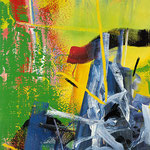
Né à Dresde en 1932, ce peintre allemand polymorphe, monument de l'art contemporain, aborde tantôt des sujets figuratifs, tantôt des œuvres abstraites. Voici trois clés de lecture de son œuvre :
Le pluralisme esthétique.
Richter explore une grande variété de styles et de techniques artistiques tout au long de sa carrière. Il passe par exemple alternativement de la peinture abstraite à la peinture figurative.
La réflexion sur la perception :
Il remet en question la façon dont nous voyons et interprétons le monde qui nous entoure en créant des œuvres qui semblent à la fois réalistes et floues, abstraites et concrètes. Cette exploration de la perception visuelle rappelle les préoccupations philosophiques liées à la manière dont nous construisons notre réalité à travers nos sens.
Dialectique entre le hasard et le contrôle :
Richter utilise aussi des techniques de hasard, telles que le raclage de la peinture ou le floutage de l'image. Cette dialectique entre le hasard et le contrôle peut être interprétée comme une réflexion sur la tension entre la spontanéité et la planification.

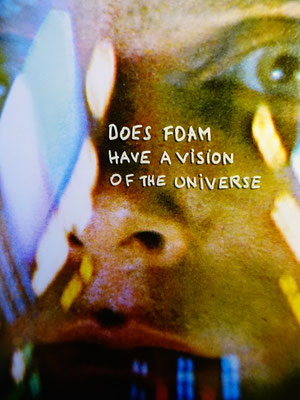

STANLEY KUBRICK
Stanley Kubrick is one of the world's most unusual filmmakers, not least because of the wide range of film genres he has explored throughout his life.
Formal experimentation
Kubrick pushed the boundaries of narrative. He experimented with innovative filmmaking techniques, including visual composition, editing, photography and the use of music to create unique visual experiences.
Genre diversity
He has directed films in a variety of genres, from science fiction (‘2001: A Space Odyssey’ and ‘A Clockwork Orange’) to war (‘Full Metal Jacket’), film noir (‘Lolita’) and psychological drama (‘Shining’). His ability to immerse himself in different genres is an eloquent example of his formal pluralism.
Adaptability
He was renowned for his ability to adapt to the needs of each project. He would take the time to familiarise himself with the source material (books, short stories, etc.) and find creative ways of adapting these stories to the big screen.
Use of images
His mastery of images is central to his multiple forms.
Exploration of universal themes
Although Kubrick tackled a wide range of subjects and genres, he frequently explored universal themes: failure, violence, technology, madness and the human condition. These cross-cutting concepts can be found in many of his works, regardless of the specific form they take.
a sign
of the times
‘Reducing a person
to a single identity
is the beginning of racism.’
In 2019, this was the tone of a Belgian campaign to defend the freedom of everyone to be irreducible to anything. Crystal clear.
Through a series of portraits of ‘ordinary’ people, the ‘Racism, you're better than that’ campaign raises awareness of the use of stigmatising clichés: from stereotypes to shortcuts, identity is too often reduced to a supposedly simple origin, a philosophy of life, an appearance... Deconstruct these absurd images...


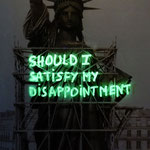
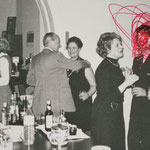
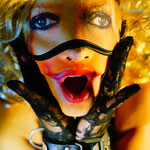
SEROUX / SVI / REALH /
SOMEXKI / GHABOR / QWEST



"I" COULD IT
ACTUALLY BE
A DREAM TEAM?
The encounter with collectors, the first of whom was the Belgian René Withofs in late 1980, highlighted the excellence of pluralism, even critical eclecticism, that many of them cultivate with openness and foresight.
From 2008 onward, through encounters with Cy Twombly, Elisa Brune, Édouard Glissant, and a re-reading of Fernando Pessoa and Marcel Proust, among others, his artistic explorations took on a considerable conceptual dimension, broadened by scientific, artistic, and literary considerations.
THREE STATES
OF SELF
Psychiatrist Eric Bernstein, founder of transactional analysis around 1960, established a clear distinction between our different "ego states." This allows for a better understanding of the diversity of our relationships and interactions with the world.
Within the collective, these "three states" are distinctly represented by three main heteronyms. Each produces radically different graphic works.
SÉROUX
The Adult Self
Rational, logical, and objective, it is characterized by controlled emotions and pragmatic behavior congruent with the reality of the here and now.
ALEX SVI
The Parent Self
It questions norms and values, and corresponds to critical thinking and reflective behaviors regarding significant educational and cultural legacies in their subjective complexities.
DAVID REALH
The Child Self
Free and spontaneous, it cultivates imaginations, experiences intense emotions, and embarks on creative impulses, open to exploration without preconceptions.
Collection SOMEXKI
Memories / Found Photographs
Collection GHABOR
Intimate Lives
Collection QWEST
Objects for Reflection
Demystifying
the individual
What are the components
of identity?
By Paul Qwest
In Japan and South Korea
Palmistry is a widespread divination practice that interprets the lines and other markings on the palm of the hand to read the past and foresee a possible future.
More broadly, each line on the skin is said to be associated with an aspect of a person's character and life: the design dictates destiny.
In Japan and South Korea, things have taken a fascinating turn since a new promise has emerged: one can change their destiny by undergoing a specific type of surgery that alters the lines on the hand.
With a creative stroke, it is now possible to authoritatively design a new personality, to invisibly tattoo a tailor-made destiny, to literally trace a radiant future.
The technique is minimal. In about fifteen minutes, an electric scalpel burns the skin in a very localized area, leaving an indelible mark that becomes clear as it heals. The patient specifies the exact lines they want, down to the millimeter.
Among the prospective buyers, mostly in their thirties, men most often prioritize a better fortune, while women seek a love that lives up to their aspirations. Stereotypes die hard.
For journalist Ben Richmond, this hand surgery follows "a strange logic that makes it appealing. It lies at the intersection of rational scientific practices—in this case, surgery—and superstition. Even those who practice palmistry find this new trend odd." The price for changing one's life with swirling scars: 650 euros.
Is that the price of architecture, or simply that of new wallpaper? One can only smile at the procedure.
For Oliver Sacks
In his essay *Musicophilia*, he describes the case of Tony Cicoria, 42, who in 1994 was struck by lightning while on the phone in a public phone booth. He survived his burns. But in the days following his accident, an inexplicable psychological shift occurred: he felt a sudden thirst to play the piano, to listen to music, to learn to read sheet music. He began to hear melodies in his head, powerfully and pervasively. He, who had never touched a musical instrument in his life, became an excellent pianist. The alteration of neural connections caused by the lightning strike created a completely new direction in his personality.
Vladimir Nabokov
In his autobiography, Vladimir Nabokov recounts a pivotal episode from his childhood, when he was fascinated by mathematics and butterflies.
“At the beginning of 1907, a serious illness mysteriously destroyed the monstrous arithmetic gift that had made me a child prodigy for a few months; but the butterflies survived.
My mother created a library and a museum around my bed, and the desire to describe a new species entirely replaced the desire to discover a new prime number.”
Lightning strikes or pneumonia are major and rare shocks, but we are all regularly subject to encounters that can alter our very being: a teacher, a love affair, a bereavement, a book, a madeleine…
Metamorphosis seems to be the rule rather than the exception.
Théodule Ribot,
founder of psychology
As early as 1889, Théodule Ribot, the founder of psychology as an autonomous science in France, wrote in *Psychology of Attention*:
“The fundamental condition of psychic life is change. If we take a healthy adult of average intelligence, the ordinary mechanism of his mental life consists of a perpetual back-and-forth of internal events, a procession of sensations, feelings, ideas, and images that associate or repel each other according to certain laws. Strictly speaking, it is not, as has often been said, a chain, a series, but rather an irradiation in several directions and in several layers, a mobile aggregate that forms, dissolves, and reforms incessantly. The normal state is the plurality of states of consciousness.”
How, then, could we define the individual? Would this description of polyphonic psychic states as a rule sound the death knell for any possible stability of the mind or the person?
One can either lament this or, conversely, take advantage of it, like the researcher Emanuele Coccia who, as opportunities, grants, and encounters arise, changes countries as easily as changing his shirt—Japan, Argentina, Germany, the United States, France—and devotes himself to medieval philosophy, then to agronomy, then to aesthetics and metaphysics, speaking eleven languages along the way, believing that he has no identity other than that shaped by the circumstances of the moment, transformable with the next twist of fate. He writes books that defy categorization, the latest of which bears the subtitle *A Metaphysics of Mixture*. When will it become natural for everyone to embrace the fluidity of identity ?
QUESTIONS
Is classical identity now nothing more than a general impression emanating from a spectacle played out to oneself, an effect of belief, a constant and familiar performance, a ventriloquist's remnant, a puppet without child or spring, a vital illusion of existence, a puff of CV, an exhortation to apply oneself, a photocopy of a selfie, a well-being in the form of scaffolding...?