A
PUBLICATION
“Do not read,
as children do,
to amuse yourself,
or like the ambitious,
for the purpose of instruction.
No, read in order to live.”
Gustave Flaubert

OUR LIVES AS EVENT
What art and science
transform in us
In May 2016, a simple chocolate mousse that she could not digest led to Élisa Brune receiving a clear medical diagnosis:
‘You only have thirty days to live, madam’.
Paul Qwest, who witnessed the scene, invited her a few days later to put life back at the heart of this event by suggesting that she and Séroux start writing a book. The adventure would last more than three years. The book will be published in Paris by Éditions Odile Jacob in 2019.



This initiatory work is a scientific, artistic and literary epic based on ten years of conversations between Elisa Brune and Séroux. Thanks to nearly sixty-six discoveries and strokes of genius, often little-known, new horizons are revealed.
The very form of the book reflects the archipelagic thinking at work in today's interconnected world. The substance of the book, on the other hand, offers the reader unprecedented tools for reflection and action, for a world that is also unprecedented.
To consider ‘Our Lives as an Event’ is to offer ourselves the opportunity to take a deep look at our relationships with ourselves, with others and with the world, and to rethink them.
Élisa Brune (1966-2018), novelist, essayist and science journalist, is the best-selling author of Le Secret des femmes, co-written with Yves Ferroul, La Révolution du plaisir féminin, Labo Sexo, Bonnes nouvelles du plaisir féminin, Bonnes nouvelles des étoiles with Jean-Pierre Luminet... Bibliography at the bottom of the page.
Paul Qwest is a former art history teacher, collector and curator.

ELISA BRUNE /
SEROUX
DANCE LIFE
CREATIVITY LOVE
Élisa Brune and Séroux shared the same philosophy of Art and the same desire to expand, interrupted by the unfortunate death of the author in 2018.
Paul Qwest will appear in the writing of the book. Since then, the visual artist and the art historian - the central curator of this work - have joined forces in an endless game of innovative choices, at every stage of the creative process.
In 2008, Elisa Brune & Séroux began meeting philosophers Edouard Glissant, Douglas Hofstadter and Judith Butler; physicists Carlo Rovelli and Jean Pierre Luminet; critic Jean Yves Jouannais and many others.
A trip together to Lisbon in the footsteps of Fernando Pessoa sparked their desire to work on the principle of choral works.
The book condenses their 10 years of conversations and the spirit of an essentially relational art of living, the principle at work here. The reader is invited to slide from the event towards an advent.
Spirit
of the book
66 QUESTIONS
Table of contents
PROLOG
1. What is this book about?
2. How do I read this book?
3. What is ignorance?
4. Do we really know what's important?
PART ONE :
DE-CLUTTERING
CHAPTER ONE :
DEMYSTIFYING THE INDIVIDUAL
1. Character, posture and imposture
2. The person in person
3. The means of narrative
4. Being the product of others
5. The impulses of interaction
CHAPTER 2 :
DUMPING THE SURPLUSES
1. Learning to unlearn
2. Release the bone of meaning
3. Calming reasoning
4. Unclog the tongue
5. To see things more clearly
6. Starting afresh
CHAPTER 3 :
EXPERIENCING WHAT'S ESSENTIAL
1. The singularity of reality
2. The idiot, the one who doesn't make sense
3. The eclipse, a flash of night
4. The night, or the dark side
5. The meaning of tragedy
6. Superimposition as the structure of the world
7. Detachment
8. Openness
9. Delight
PART TWO :
EQUIPPING
CHAPTER 4:
OTHER ATTITUDES
1. Contemplating reality
2. Being in love with details
3. Exploring consciousness
4. Broadening the point of view
5. Experiencing time
6. Getting moving
7. Generating shapes
8. Weaving the true and the false
9. Thinking backwards
10. Choose between two and three
11. Being fragile
CHAPTER 5 :
UNEXPECTED METHODS
1. Giving yourself carte blanche
2. The treasures of waste
3. Rebounding
4. Throwing bridges
5. Dare to collage
6. Composing by superposition
7. Constructing arrangements
8. Enjoying serendipity
PART THREE :
ENTERING THE PRESENT
CHAPTER 6 :
OPENING UP TO OPEN FORMS
1. Hesitation
2. The unpredictable
3. Incompleteness
4. Discontinuity
5. Thought in an archipelago
CHAPTER 7 :
ART BY EXAMPLE
1. The artists :
Robert Filliou and life above all
2. The viewers :
Vermeer rediscovered
3. The work :
The appearance of Vivian Maier
PART FOUR :
EXPANDING HORIZONS
CHAPTER 8 :
NAVIGATING COMPLEXITY
1. The value of misunderstanding
2. The blind spot of reason
3. Rising madness
4. Bypassing borders
5. The mythology of fine art
6. The riches of failure
7. The fresh air of the incomprehensible
8. Knowing nothing
9. The relevance of the inappropriate
10. To please, to displease, to ignore
CHAPTER 9 :
WEAVING THE MULTITUDE
1. Feeling numerous
2. The registers of otherness
3. Embracing globalisation
EPILOGUE
1. The elusive remains
2. Outrages and Delights
NEWSPAPER /
Liberation critic
«OUR LIVES", ESSENTIAL HAZARD»
By Louise Bernard
BETWEEN PERSONAL REFLECTIONS AND QUOTES FROM AUTHORS, ELISA BRUNE AND PAUL QWEST WEAVE A CHORAL BOOK IN WHICH THE ARTS AND SCIENCES REDEFINE OUR IDENTITY.
It could be personal development, but it is based on science and literature. Elisa Brune and Paul Qwest's book, Nos Vies comme événement, claims to be 'choral'. It advocates originality and applies it to its format: after a guiding question that resembles a philosophy essay topic,
- What do we know about our ignorance?
"Why bring out what is not yet there?
or "Do we also recognise ourselves elsewhere than in ourselves?" -
the article begins with a fact, an anecdote, or a concrete scientific explanation before gradually sliding into the artistic and concluding with a touch of lyricism.
The two authors then give way and collect quotations from different thinkers, in relation to what they have said before, to build 'bridges' between their personal reflections and fragments of other texts that echo them, in order to set thoughts and languages in motion. The menu includes a wide range of personalities (writers and philosophers), although the names Barrico, Proust, Kafka, Pessoa, Nietzsche, Beckett and Wittgenstein are often mentioned.
The aim is to make use of the different types of knowledge that revolve around us - astronomy, neurology, geometry, linguistics, history - to better envisage what we are, who we are as individuals, what we create, and to reflect on 'events', those that punctuate our lives and shape us, and those of history, on a global scale.
None of this is intended to overwhelm the reader. The alternation between prose and this fragmentary anthology even makes the whole thing rather light. Above all, the vocabulary is never intended to be jargonist: you might read "une bouffe entre potes" ("a meal with mates") to talk about the Last Supper revisited by Veronese, or the expression "to make a mess of people's minds" ("messing with people's minds") to talk about Picasso's Demoiselles d'Avignon. Instead, the authors seek to provide keys for thinking and inventing. Horace's catchphrase "Dare to know" remains the guiding principle of the book, which calls for freedom and independence, detachment from preconceived barriers - "How many preconceived ideas remain to be overturned? - to leave room for chance and the unknown.
The intellectually dense questions are refreshed and sometimes made to smile: did you know that the canary forgets its spring songs every year because remembering them would weigh down its brain and prevent it from flying? We learn that, seriously, it is baseball that distinguishes us from the great apes. The strength gained in our shoulders thanks to bipedalism allows us to hit (not just balls) and acquire hunter status.
"BREATH"
There is a story behind this project. A chance event in Elisa Brune's life became an event: indigestion from a chocolate mousse led to a diagnosis. She had only a few years to live. The essayist who wrote seminal works on female pleasure died in 2018. Before her death, she and her friend wanted to add one last stone to the edifice. Paul Qwest naturally dedicated this book, which exists thanks to her "breath of fresh air", to her. How can we fail to understand the insistence on the idea of accepting the mysterious and the incomprehensible?
An article on fragility concludes: "The foundation is that there is no foundation and that makes nothingness habitable." The text becomes a tribute.
Louise Bernard
Élisa Brune and Paul Qwest
Our Lives as Events
What art and science transform in us
Odile Jacob, 480 pp.
This poetic essay captures the essence of a fundamentally relational way of life. Reading it invites the reader to move from the event to the advent.
THE EVENT
Making things happen is intrinsic to life as it is, as soon as we see it as a succession of choices, decisions and attempts that are more or less daring or even out of the ordinary.
The art of living is not illusory, according to Paul Qwest's book. There is play between what chance imposes and the space we have to make something else happen. But there is more.
AN ADVENT
Marking an advent. There are literary, pictorial, cinematographic and architectural works in every field of creation and innovation that mark their era.
With them, there was a before and an after. Perhaps this is the profound interest of what is at stake in Séroux's research. He is considerably broadening the once stereotypical way in which identity was experienced.
WHAT IT CHANGES
An advent is never without consequences for how life, how it is viewed and its meaning will be modified from now on. What would this beginning be?
It is marked by societies that are at last pluralist and multicultural, by the creolisation of the world and the recognition of 'others' in all spheres.
Translating this into artistic form means offering it as an object of thought to everyone.
élisa brune
BIBLIOGRAPHY
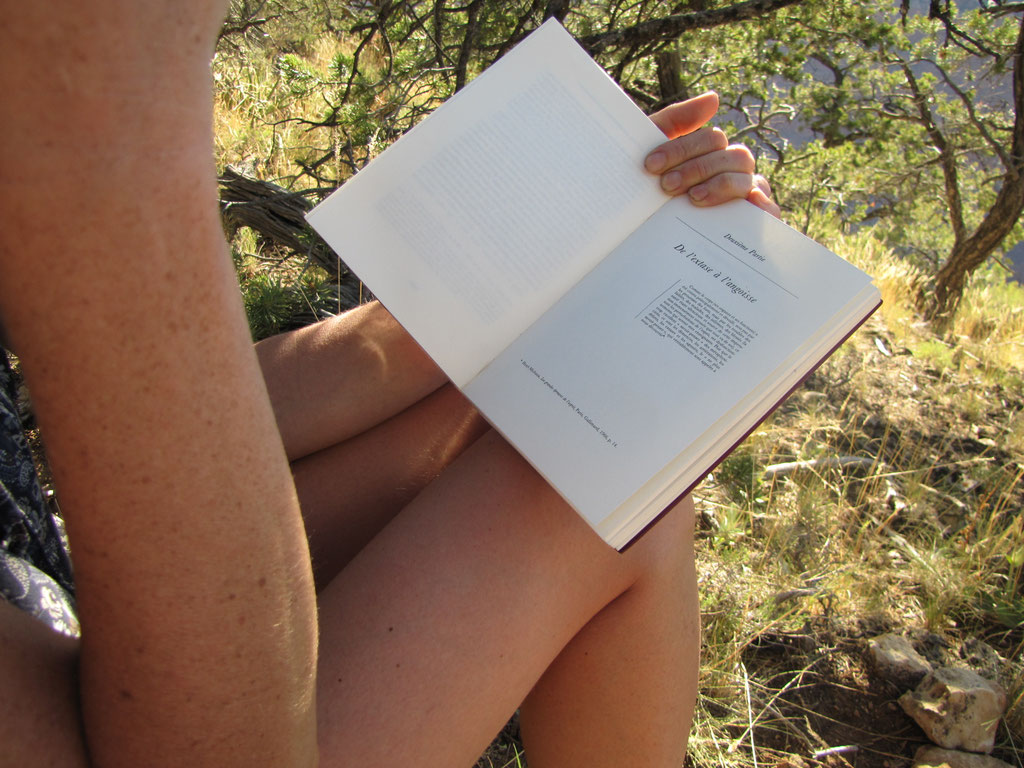

LITERARY WORKS
Fissures. Paris : L’Harmattan, 1996 ;
Petite révision du ciel. Paris : Ramsay, 1999 ; J'ai lu 2000,
Blanche Cassé. Paris : Ramsay, 2000
La Tournante. Paris : Ramsay 2001 ; J'ai Lu, 2003
Les Jupiter chauds. Paris: Belfond 2002 ; Labor, 2006
La Tentation d'Edouard. Paris : Belfond, 2003
Relations d'incertitude (avec Edgard Gunzig). Paris : Ramsay, 2004 ; Labor 2006
Un homme est une rose. Paris : Ramsay, 2005
Alors heureuse... croient-ils! La vie sexuelle des femmes normales. Paris : Le Rocher, 2008
La Mort dans l'âme - Tango avec Cioran, Paris, Odile Jacob, 2011
Pensées magiques - 50 passages buissonniers vers la liberté, Paris, Odile Jacob, 2013
Le Salon des confidences - Le désir des femmes et le corps de l'homme, Paris, Odile Jacob, 2013
Tant pis, je fonce ! 50 histoires pour saisir la vie, Odile Jacob, 2018
Nos vies comme événement : ce que l'art et la science transforment en nous, avec Paul Qwest, Odile Jacob, 2019
SCIENTIFIC WORKS
Le Goût piquant de l'univers : Récit de voyage en apesanteur. Paris : Le
De la transe à l'hypnose: récit de voyage en terrain glissant. Éditions Bernard Gilson, 2006
Le Quark, le neurone et le psychanalyste. Paris : Le Pommier, 2006
Séismes et volcans - Qu'est-ce qui fait palpiter la Terre?, (avec Monica Rotaru). Paris : Le Pommier, 2007
Bonnes nouvelles des étoiles, avec Jean-Pierre Luminet, Paris, Odile Jacob, 2009
Le Secret des femmes, Voyage au cœur du plaisir et de la jouissance, (avec Yves Ferroul), Paris, Odile Jacob, 2010
La Révolution du plaisir féminin - Sexualité et orgasme, Paris, Odile Jacob, 2012
Labo sexo - Bonnes nouvelles du plaisir féminin, Odile Jacob, 2016